
- Cotton Fabric: Provides excellent mechanical strength, impact resistance, and a fibrous structure that holds the resin.
- Phenolic Resin: Offers outstanding electrical insulation, chemical resistance, heat resistance, and acts as the binder, creating a rigid, stable matrix.
- Exceptional Mechanical Strength: High impact strength, compressive strength, and wear resistance make them ideal for parts subjected to heavy loads or friction.
- Excellent Electrical Insulation: Naturally resistant to electrical current, making them perfect for insulatory components in various electrical systems.
- Good Thermal Stability: Can withstand moderate to high temperatures without deforming or losing structural integrity.
- Chemical Resistance: Resistant to many common solvents, dilute acids, and alkalis.
- Machinability: Relatively easy to machine, cut, drill, and fabricate into complex shapes using standard tools.
- Vibration and Noise Dampening: The layered structure helps absorb vibrations, contributing to quieter operations in machinery.
- Cost-Effectiveness: Often a more economical alternative to metals or advanced plastics, especially when a balance of properties is required.
- Electrical Industry: Terminal boards, switchgear components, insulating washers, spacers, bus bar supports, transformer parts, and arc shields.
- Mechanical Engineering: Gears, bearings, bushings, wear pads, thrust washers, pulleys, and rollers, particularly where self-lubricating properties (when combined with graphite) or noise reduction is desired.
- Automotive: Certain friction components, gaskets, and insulating parts.
- Textile Industry: Shuttle blocks, picker sticks, and other wear parts due to their low friction and durability.
- Jigs & Fixtures: Often used for manufacturing jigs, fixtures, and templates due to their stability and ease of machining.
- Marine & Offshore: Components requiring resistance to saltwater and mechanical stress.
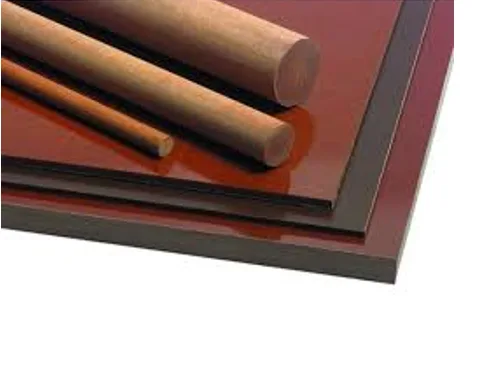
- Sheets: The most common form, ideal for cutting, punching, or machining into flat components like terminal boards, insulators, washers, and structural panels. Their consistent thickness and large surface area make them highly versatile.
- Rods: Solid cylindrical bars, perfect for turning or milling into parts requiring circular cross-sections, such as gears, bushings, rollers, and pins. They offer uniform strength throughout.
- Tubes: Hollow cylindrical forms, often used for insulating sleeves, spacers, standoffs, or lightweight structural elements where a hollow core is advantageous. They combine high strength-to-weight ratio with excellent electrical properties.
- Reliability: Decades of proven performance in demanding environments.
- Balance: A unique combination of mechanical, electrical, and thermal properties that is hard to match in a single material.
- Cost-Efficiency: Providing high performance without the premium price tag of more specialized materials.
- Adaptability: Easily fabricated into complex parts, reducing manufacturing complexity.
Send Query
Our Testimonial

Devpal Yadav
3 years ago
★★★★★
Best bakelite sheet supplier.
Ayush Singhal
3 years ago
★★★★★
Jitendar Yadav
3 years ago
★★★★★
Great place to buy fibre sheets. Very satisfying, Abhishek Jain have a good knowledge of the products.
VINAY KUMAR
3 years ago
★★★★★
Silicon rubber tube best quality and best price
Surender
3 years ago
★★★★★
Bought fibre glass sheet, good quality best price.
Pawan Panday
4 years ago
★★★★★
We buy Bakelite sheets 0.8mm for sticker die cutting application. Very satisfied with the quality.
Prakesh Singh
4 years ago
★★★★★
I have been buying bakelite sheets special grade for panels and Heat Shrink Tubes from SK Jain Distributors. Never came across such a genuine supplier.
Bablu Khan
4 years ago
★★★★★
SK Jain distributors has good quality bakelite fibre rods, Rigid PVC sheets stock in Delhi, India.
Nancy Sukhija
5 years ago
★★★★★
Pleasantly surprised!! The whole process of buying phenolic laminates (Bakelite Sheets and Rods) and Peek Engineering Plastics sheet was so seamless. I just had to tell the owner about my application then he suggested these products. Finally found a reliable vendor for all our company's plastic sheets and rods requirement.
Jayant Bhandari
5 years ago
★★★★★
Wanted tray lining for non-stick baking. The owner Abhishek Jain at SK JAIN DISTRIBUTORS Delhi suggested Teflon Cloth and Silicon Coated Fibre Glass cloth. Finally bought Teflon Cloth after understanding the technicalities from the owner. Great buy! Will buy in future too.